About Pele Ohad Ezrahi
Ohad Pele — life-artist. An expert in Kabbalah and ancient Hebraic wisdom. Guides people from around the world to discover the fullness of their lives as a rich, fertile field, and to craft from their Inner Point a life that is an authentic living artwork, uniquely theirs — while overcoming the split between spirit and matter, eros and the sacred, ancient roots and living innovation.
Full Bio
There are so many ways to tell a person's life. Here is one way to tell my story:
Childhood
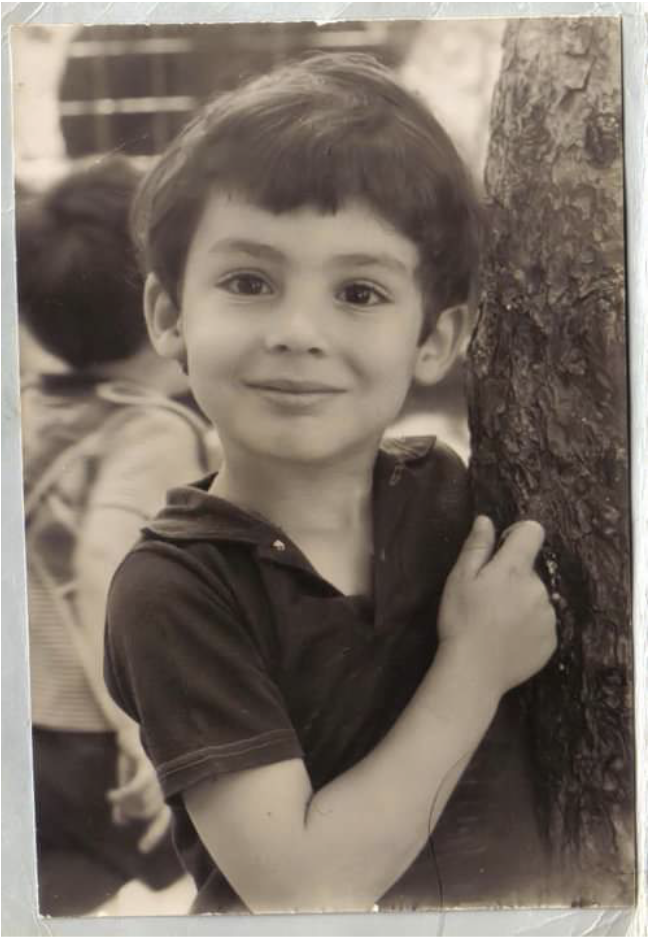
I was born into this cute body of mine on Mount Carmel in 1965, to a very, very loving family. A secular Israeli family, good people of what you'd call the middle class. On my mother's side, our family has lived in the Land of Israel for a great many generations. On my grandmother's side we descend from the Abou family — the Hebrew initials stand for the verse from Psalms, "made of truth and honesty" — who emigrated from Algiers to Safed in 1817; and on my grandfather's side we descend from the Kubi family of Tiberias and from the Toledano family, who came to Jerusalem from Toledo after the expulsion from Spain, already at the end of the 15th century. These were families of sages, rabbis, and kabbalists, but also of community leaders, politicians, merchants, and landowners.
I received a good secular education, as they say. There was no religious faith in our home, and no spirituality beyond the good values of respect for every human being and living a life of integrity (and those are very big things indeed!).
My most meaningful memories as a child are of a constant kind of wondering. There were no words for this wondering, but there was a sort of feeling of, "Really?? Like, this is it? This is the world?" Everything was fine. But not more than that. I felt as though "what is essential is invisible to the eye," as the fox says in The Little Prince. So I went looking for it.
I did not find the "truly important things" in the activities boys occupied themselves with — football and all that — but in nature. Though I grew up in a fairly grey suburban sprawl, I was a nature lover. I devoured encyclopedias of nature and science. And at fourteen, I found the School for Environmental Studies at Midreshet Sde Boker, an eight-hour train and bus ride from home — and I knew that was where I belonged. My parents objected to my leaving home at such a young age, but I enrolled myself, and they, as was their way, saw how much it mattered to me and eventually supported my move.
My Great Teacher
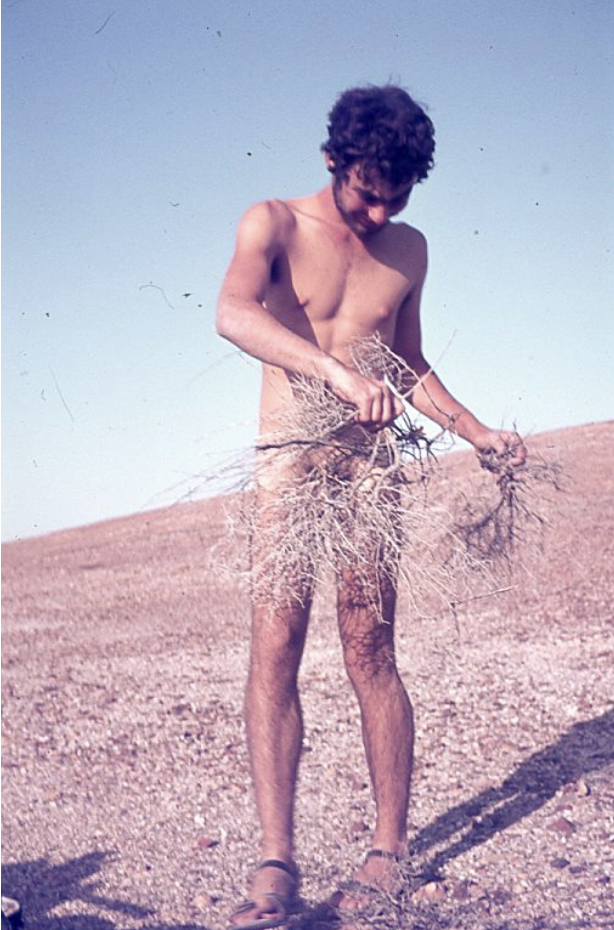
The encounter with the desert was like meeting a guru. I have no other words for it. Like meeting a magnificent lover. The ancient majesty of the desert's canyons, the huge vultures, the ibex with their long curved horns, the pure water springs hidden in the crevices — all of these watered my thirsty soul. We lived in a mixed-gender boarding school, and before long, I began to discover other important things hidden from the eye. And those, too, I loved very much.
There were no screens back then. Thank God I grew up without the internet and without any porn. A single battered television stood forlorn in some clubroom that nobody bothered to visit. But I read books — a lot of books. Non-fiction, mostly. And I went out a lot to meditate in the desert.
Through Hermann Hesse's Siddhartha, I discovered Buddhism, and from then on I swallowed every book on the religions of the East that I could find in the library. Castaneda's Don Juan opened the gateway to shamanism for me, and the desert began to speak with me. At school, we studied ecology, and I felt that the truly important things were not taught or pointed to — how to feel a stone, a rock, an eagle or a spring through the heart, before quantifying them by all sorts of scientific measures. I skipped class and went out as much as I could, to learn directly from my great teacher — from the desert.
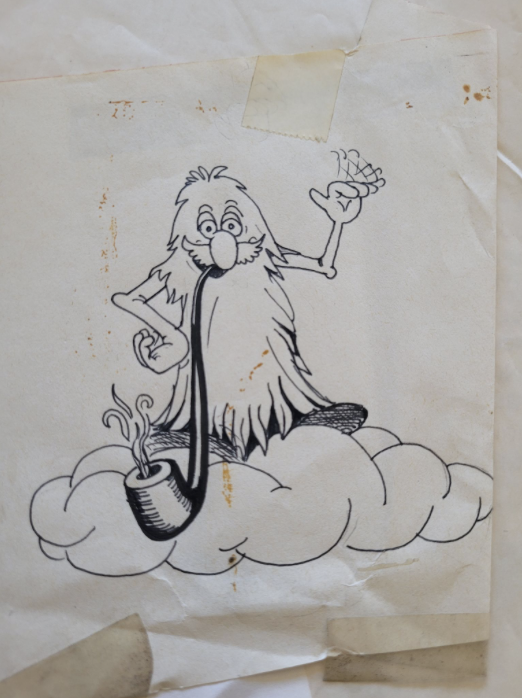
I earned my matriculation with an emphasis on art. I made an animation film about the sunrise in the desert.
These were the days before computer animation. I drew thousands of drawings by hand, and photographed them, frame after frame, on celluloid film. The project received funding from the Israel Film Fund.
"Troubler of Israel"
I had no connection whatsoever to the Jewish religion. All organized religions seemed in my eyes like spirituality contaminated by politics and a desperate attempt to control human beings (which, by the way, is more or less what I still think today).
When I refused to stand up for the Kiddush blessing forced on us every Shabbat in the boarding-school dining hall, and refused to let the Israeli Ministry of Education nail a mezuzah to my doorpost, they nearly threw me out of school. Boys from the grade above me spat at me outside the dining hall and called me by the biblical curse "Troubler of Israel." I don't think they knew that originally these were the very words with which the corrupt King Ahab of Israel addressed Elijah the prophet: "Is that you, O troubler of Israel?"
This was the first time in my life that "rotten tomatoes" were thrown at me. From then until today, it happened every few years, and with ever-growing intensity. If I had gathered up all the tomatoes thrown at me over the course of my life, I could probably open a ketchup factory.
It was a small book by Martin Buber that, toward the end of high school, opened a window for me into the enchanted world of Hasidut. Something in these Hasidic tales resonated familiar. It was like Zen and Tao, only in the tongue my ancestors spoke. I grew curious. While my friends were training to be accepted into elite commando units in the army, I declared that I saw no point in it. My life was not meant to spill blood — mine or anyone else's — because some corrupt politicians had made a decision that served their political aspirations. The very idea seemed absurd to me. The chasm that already existed between me and "the boys" widened further. My pacifist stance earned me buckets of scorn. I was seen, of course, as a traitor.
Jerusalem
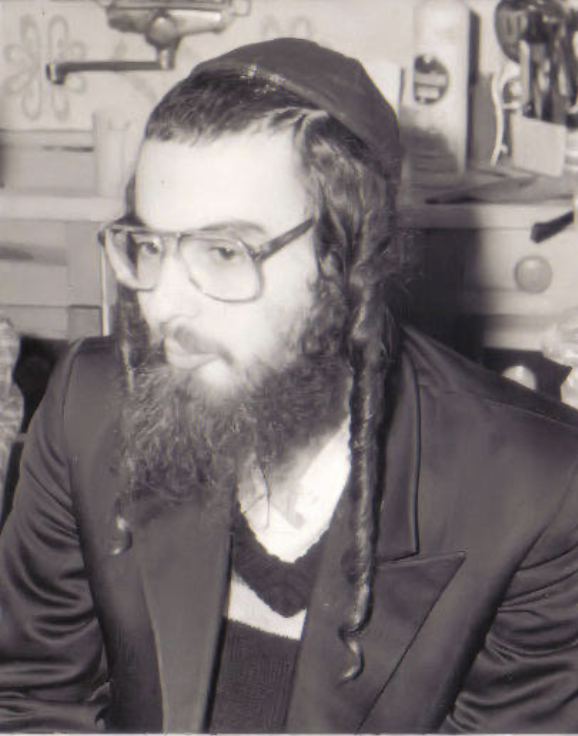
After finishing high school, I moved up to Jerusalem. I thought I would study Kabbalah at some ultra-Orthodox yeshiva for half a year or so, and then go on my way. But the idea made my teachers laugh. "You want to study Kabbalah?" they chuckled. "First, you must master Torah and Mishnah, Talmud and Halakha." As someone who had absorbed a great many Zen stories into his heart, I knew that coming with a full cup is not the best way to learn. I emptied myself and said, "Then teach me!"
I labored over my studies day and night. In time, I was examined in Jewish laws by a judge from the rabbinical court of the extra ultra-Orthodox community of Jerusalem. The Hasidic Rebbe of Belz, Rabbi Yissachar Dov Rokach, took me under his wing as a protégé. When I was eighteen and a half, the Rebbe officiated my wedding to Ruth, my girlfriend from high school, who became my wife and the mother of my children.
When my basic knowledge proved sufficient, the Rebbe asked one of his kabbalist disciples — Reb Usher Lustigman — to initiate me into the path of Kabbalah. At twenty-one, I was admitted to the Jerusalem yeshiva of kabbalists, "Sha'ar HaShamayim" (the Portal of Heaven), and became their yenuka, the baby of the yeshiva. With endless passion, I plowed through the ancient writings of the Ari's Kabbalah. I lived the pious life of a kabbalist devotee, yet something was missing for me in the inner understanding of the Kabbalah.
The poet Admiel Kosman, today an important academic professor of Jewish thought, who was then my study-bench companion at the yeshiva, introduced me to Rav Shagar, of blessed memory. Shagar's classes wove together the insights of Kabbalah and Hasidut with modern psychology and post-modern philosophy. The Rebbe of Belz did not like this, but something deep opened inside me through Shagar's teaching, and I could not deny it.
At some point, I came to the classes of the great kabbalist Rabbi Yitzchak Ginsburgh, and new heavens opened for me.
Worlds of Doubt
In 1994, in a casual conversation outside the synagogue, I was grumbling against something foolish that rabbis, in their great wisdom, had said in the Israeli media. "These rabbis — they understand nothing about the worlds of doubt," I told the friends standing with me. "What are the worlds of doubt?" my friend Eitan asked me with curiosity. I went home, sat down, and wrote my first book, Worlds of Doubt, a commentary on the different theological positions in the Book of Job.
The rabbis who have a ready-made explanation for every disaster that befalls the public seemed to me like the company of Job's friends, whom God rebukes at the end of the book. Many rabbis, of course, did not like my Worlds of Doubt, but Rabbi Ginsburgh, as a gesture of love, gave a class on the book in his yeshiva and approved it as a good kabbalistic text.
My Worlds of Doubt passed from hand to hand among Orthodox yeshiva students as semi-underground study material and was adopted by Yeshiva University in New York as a study text for an academic course on Job.
I was deep in debt. My friend the cyberneticist Dr. Yitzchak Hayut-Man, of blessed memory, offered to clear my debt if I would sit and write a study on the Temple on behalf of "the Academia for Jerusalem." I agreed gladly. Out of that study came a book titled The Old Shall Be Renewed and the New Shall Be Sanctified (1997), containing a large essay from my own keyboard that opens the subject of Eros in the Temple, in the secret of the cherubim, alongside a fascinating futuristic article by Yitzchak Hayut-Man pointing to ways of building the Third Temple as a temple for all nations, by means of advanced technology.
Yitzchak Hayut-Man was also the one who initiated me into psychedelic experiences.
LSD
In my youth, I avoided drugs. But when Yitzchak offered to do an LSD ceremony in his chamber in the Old City of Jerusalem — a chamber whose dimensions were built according to sacred geometry — I agreed. He had five stamps of LSD. Three he gave me, and two he swallowed himself. In those days, I had no idea this was a very considerable quantity of LSD. I ate my portion and sat down with the tefillin on my head to study the Book of the Zohar. Yitzchak sat in the adjoining room and remained at my service for any moment I might need him.
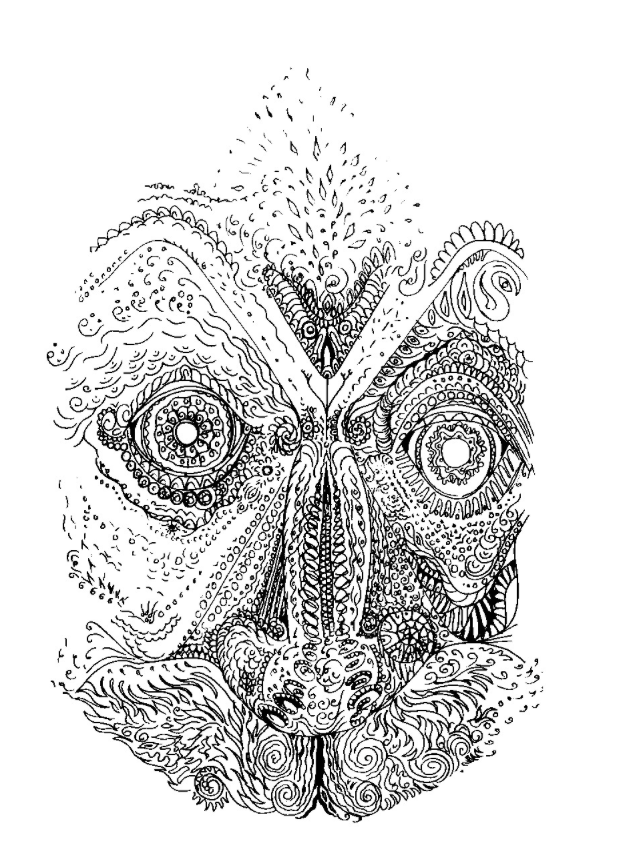
"Nothing is happening," I thought to myself in disappointment. But then I noticed a greyish moth, sitting there on the wall. Something about this moth intrigued me. I approached it. As I drew near, it suddenly spread its wings, whose underside was extremely colorful. Metallic blue is what I remember from there, as the color of the entrance into a whole new world. The moth's wings spreading opened the psychedelic world for me. It turns out that one of the secret portals leading to the hidden worlds was to be found on the concealed side of a grey moth’s wings. The truly important things really are invisible to the eye.
The day after, I drew the face of Yitzchak, as it appeared to me under the influence of LSD. Years later, I painted this psychedelic butterfly wings experience for the cover of my first album – Something Out of Chaos.
Eros in the Temple?
The religious-nationalists, lovers of the Temple idea, did not like my book. Eros? In the Temple? Yuck! Hence — Tomatoes.
Rabbi Ginsburgh called me on the phone and told me he could no longer defend me. I remember hanging up the phone and saying to my friend Rabbi Mordechai (Marc) Gafni, who stood beside me, "I am an orphan."
My research opened my eyes to see that sacred sexuality was very central in our forefathers' and foremothers' conception of worship. The God-Goddess sacred union was bound up there with rituals that today would be categorized as wanton orgies — but all of it was censored later on by rabbinic Judaism.
The codes of "modesty" that we obeyed as religious Jews, as well as the repressed and shameful sex life of my students at the Orthodox institutions I taught at, seemed to me plainly unhealthy. When I began to wonder about this out loud, people started to see me as dangerous.
One of the important rabbis I consulted told me, "Look, young man, you need to open your own esoteric institution." And so I did. I decided to open a place which I called the "Yeshivashram" — a fusion of the Jewish concept of Yeshiva with the Indian Ashram. A place for men and women to live together as a spiritual community that dares to examine everything anew, without any religious dogma.
Looking for funding and for a place where we could land, I began speaking publicly about the idea. The journalist Yair Sheleg heard about it and took interest. I was glad of the opportunity — but in the article he wrote about me, I was painted as a kind of Sabbatean messiah who had come to hold orgies in the name of repairing Judaism and achieving redemption.
My neighbors in Bat Ayin didn't like that very much. During a Shabbat evening prayer, two men lunged at me with their fists. (A few years later, they sat in prison for their part in the "Bat Ayin Underground," which tried to blow up a Palestinian girls' school with gas balloons, and, thank God, did not succeed.)
As luck would have it, around that time, I had written an article on "Eco-Feminism in Kabbalah." The article reached one of the founders of the eco-feminist movement, Professor Irene Diamond, who immediately invited me to join a Rockefeller fellowship project at the University of Oregon in Eugene.
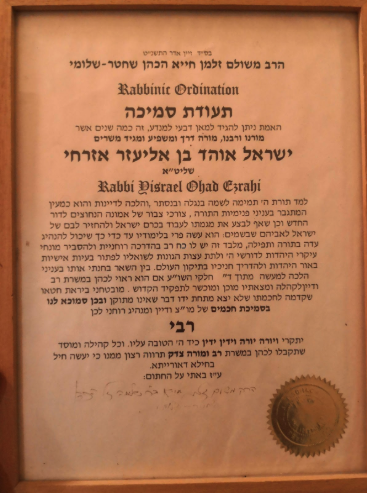
At the same time, I also met Reb Zalman Schachter-Shalomi, of blessed memory, who came to visit Israel — the one who would later ordain me as a rabbi in his lineage.
Lilith
By the year 2000, I had already finished writing a large, wide-ranging book on Lilith in Lurianic Kabbalah. The book, written in collaboration with my friend Gafni, came out a few years later with Modan Publishing, under the title “Who's Afraid of Lilith?”
The book pointed to Lilith's high spiritual roots in Lurianic Kabbalah. The archetype of Lilith, who is the independent, sexual, intellectual, and rejected part of every woman, needs to be re-integrated into holiness, said the hidden books of Kabbalah. The Lilith of the scriptures set my imagination ablaze, and I wanted to meet her face to face — flesh to flesh.
When I flew to Oregon for three months, I received permission from my wife to explore sexuality with other women while I was far from home — but without forming any deep bonds. That didn't quite work out for me. Before long, I fell hard for the very first woman I met, at the home of a mutual friend. She was certain I had plenty of experience with women, but the truth is that all of it was new and thrilling to me. Even simply touching her — a non-Jewish woman — was new for me, let alone experiencing open, very loud sex in broad daylight, without any of the matters of "modesty" and religious fears. It was all new and refreshing to me.
While she laid her hands on me from below, Rabbi Zalman spread his palms over me from above, and ordained me a rabbi in his lineage — a lineage that also includes Sufi, Buddhist, and Christian-mystical traditions, as he whispered to me in those eternal moments of grace, when we stood together beneath his tallit in his study in Boulder, Colorado. "Whomever you ordain, when the day comes, will be ordained under our lineage, which reaches all the way back to the Baal Shem Tov and the hidden kabbalists before him," Reb Zalman said in his sweet voice, his hands resting on my head and my eyes flowing with rivers of tears.
Kehilat HaMakom — The Community of the Place
I returned from America like one who had discovered America, and with a little seed money, I began establishing the Yeshivashram. Ruth and I left Orthodoxy together. She came to visit me in Oregon, and there she took off her head covering, which she never again put on to hide the beauty of her blond, curly hair. We could no longer bear the thought of living in the settlement of Bat Ayin, which in those days was far more extreme than it is today. Our last six years there were marked by deep social ostracism. They even paved the road only up to our neighbors' house, which stood about two hundred meters from ours. Living six years in ostracism as a "dangerous person" in a conservative community was a smart way to prepare me for the rotten tomatoes that came later in my life.
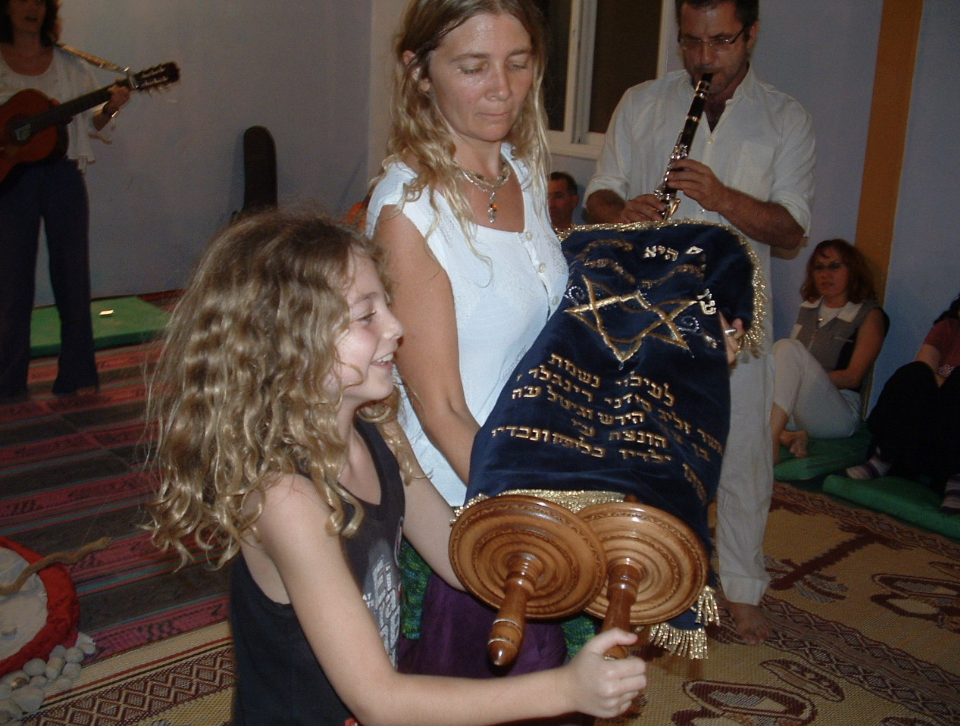
Wonderful men and women (truly) who studied with me joined us, and together we founded "HaMakom Community," whose spiritual center was the ashram we built on the edge of a cliff in the Judean Desert, overlooking the Dead Sea.
This ashram throbbed with life for five years, five wonderful years. During them, Ruth and I came to understand that our paths as a couple had to part, with love. I wanted to explore a life of polyamory, and she, after trying, decided it was not meant for her. We held a ceremony in a small communal circle. "In this divorce ceremony," one of the women present said, "there was more love than in many weddings." Only two years later did we bother to present ourselves at the Chief Rabbinate, to let them perform their own outdated ceremony, so we could register as “divorced” with the Ministry of the Interior
As a parting gift, Ruth bought me a double bed — so that I would have a place to host lovers.
DAWN
I met Dawn Cherie when I was invited to teach a course on the tales of Rabbi Nachman of Breslov at "Elat Chayyim" — the Jewish Renewal retreat center in upstate New York. This was after I had developed a deck of cards based on Rabbi Nachman's mythical-kabbalistic stories and published the book Paths of Empowerment, which interprets the kabbalistic-psychological layer of "The Master of Prayer" story. Dawn had enrolled in the training course for masters of prayer at Elat Chayyim, and I was teaching my course in parallel. When I saw her walking to the pool on the first day, I knew something big was happening.
Our first conversation, at a dinner table with mutual friends, turned on the Hasidic teaching that likens prayer to an act of lovemaking with the Shechinah. Our mutual friends saw the spark that had been kindled between us and tried to warn her off me. They told her the truth — that I am a radical person — and why not go with Rabbi A.G. instead, who is a decent fellow? But Dawn wasn't looking for a decent fellow. She was looking for something that would take her beyond herself.
That night I couldn't fall asleep — and I'm someone who always sleeps well. I sat and composed a song: "On a tight rope, above the abyss, what else is there to do but dance? Dance your fears, drunk on the love of God, who is all this fullness and emptiness at once." I was afraid to tell Dawn that I had a crush on her, but I knew that if I let fear rule my life, that would be death itself: "Otherwise you'll die on the rope, even if you wouldn't fall — you'll simply die of fear, trembling from your own thoughts," I wrote. "It's in the Now that everything is vibrating, everything is full, the Goddess is dancing in every leaf." (The song was written in Hebrew.)
At breakfast by the juice bar, she asked me with American politeness: "How did you sleep?" "Not so well," I answered. "Me neither," she said. With my Israeli chutzpah, I asked, "For the same reasons?" and she replied, "Most likely."
At lunch break, we went to bathe naked in the river. On the way there, I confessed my attraction to her, "but you should know that I am not a monogamous person," I added, afraid of her reaction. To my delight, she only threw her arm up to the sky and said, "Yes! Me too." What a relief that was.
The kiss we shared under the little waterfall will never be forgotten. It is recorded in the cosmic library for eternity. That night she came to my room, and ever since we have been together. Twenty-four years and counting.
In 2003, she landed for the first time in Israel and came to visit me in the Judean Desert. As someone who grew up in snowy Buffalo, she found the desert heat in August a hot joke. "It's an oven!" she said. The camels received her with their characteristic chewing of cud, and she became part of our community. Dawn brought the spirit of ritual theater to the life of our community. The special Rosh Hashanah ceremony, done as a personal quest between stations in a desert canyon, where at each station you meet a new challenge (such as meditating before a mirror in order to know yourself better), was her design.
In 2006, we got married. This time, the one who performed the ceremony was my soul brother Arkan — a Peruvian shaman who had become a chief of the Lakota. Beside an old spring in the Galilee, we consecrated ourselves to the Great Divine Spirit through our love for one another. Musician friends from the legendary bands "Sheva" and "Diwan HaLev" performed a Sufi zikr, other friends waved flags to sanctify the four directions, students of mine who are professional clowns conducted a rigorous body search of everyone who arrived — for security reasons, of course… and Yehoo, with other children, popped out of the forest like creatures of wonder and startled the guests with thoroughly unconventional questions.
The ceremony lasted five hours. When I apologized to my uncles that it might have been too long for them, they said, "Not at all — usually we only see things like this on National Geographic."
Rosh Pina
Dawn and I moved to Rosh Pina and opened a center there. We held creative and sexy holiday ceremonies, such as a Tu BiShvat Seder in which the fourth cup, the one aligned in Kabbalah with the World of Atsilut (Emanation), was a cup of Ayahuasca; or a Hanukkah ceremony in which people volunteered to serve as candles in a human menorah, and had to be "turned on" through pleasure.
In Rosh Pina, we deepened our investigation into the connections between our renewed version of Kabbalah, Tantric teachings, and polyamory. Dawn had her hands in the pie, and I learned from experience what jealousy is, as my beloved explored the full range of Israeli men, from old-money sophisticates to the gold-chained street boys of the Tel Aviv beachfront.
Love from the Ashes
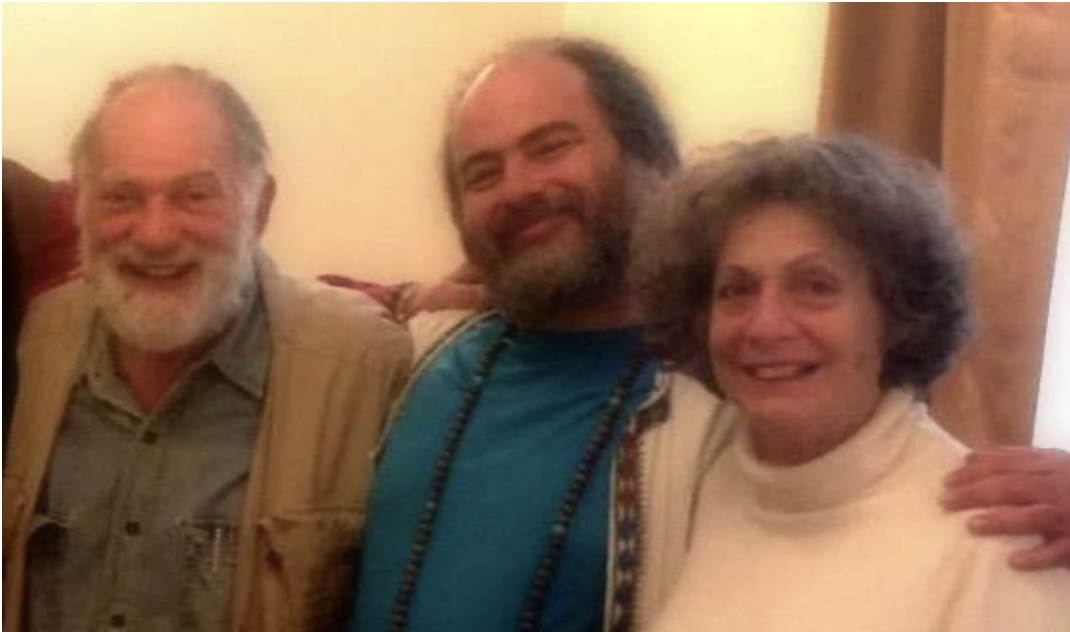
For fourteen years, I served under the guidance of Roshi Bernie Glassman, founder of the "Zen Peacemakers" order, as the rabbi of the "Bearing Witness Retreat" in the death camps of Auschwitz-Birkenau. Dawn joined me there several times, too.
For fourteen weeks, I sat in meditation in the death camps, together with Jewish and Polish survivors, and Germans, usually consumed by collective guilt, some of them descendants of Nazis. There, I came to know what endless grief means — a grief that turns into a Hasidic dance with tears, because the depth of the rupture simply cannot be described.
On one of these occasions, a Polish filmmaker came to the retreat. He pulled out a camera and began documenting. He produced the result as a documentary film called Rabbi Ohad, which was screened at the Warsaw Film Festival and is now freely available on YouTube.
At Auschwitz, I learned some things that cannot be learned anywhere else. Marian, one of the Polish survivors who was a prisoner in Auschwitz, leaned on his cane and said to me: "We will need leaders of peace and love who are as great as Hitler and Mussolini. Hitler and Mussolini moved millions through fear — will you be able to move people through love?" he asked, placing his gnarled hand on my head and blessing me. His sweet wife, who was an old yet beautiful theater actress, nodded her head in agreement and kissed me. They were people of love. After going through the most terrible inferno of all, they still believed in love. (See my article about Marian and his art, here.)
The Dharma of the Streets
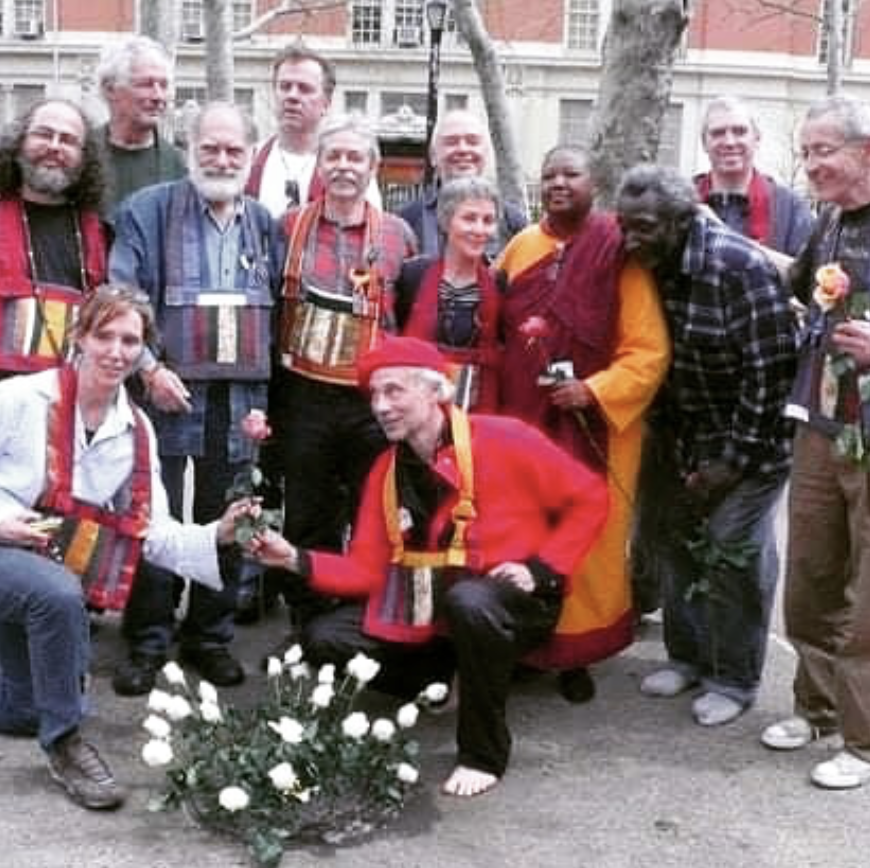
With Roshi Bernie Glassman and his students, I also went out on a "Street Retreat" in rainy Manhattan. Bernie, who created "socially engaged Buddhism," took meditation out of the Zen centers and into the streets. With no money and no blankets, we went out to live for a few days and nights as homeless people. To be homeless is the greatest fear of every civilized person. To be thrown out onto the street. To beg for alms. To search for shelter from the rain and a dry piece of cardboard to cover yourself with at night. To be the one whom decent people pass by, pretending they didn't see him. The one whom mothers tell their children not to gaze at — but they do, and I smile. Ending up as one of society's transparent people is one of the greatest fears for anyone still trying to make it in life.
One of the churches gave us a hot meal, and for dessert — socks. Only then did I understand how a pair of dry socks in winter is simply a treasure. I befriended an older Black man named Bat-Man, a homeless Vietnam veteran who was the undisputed king of the street-dwellers of Manhattan. As we were walking about, in one random park, Bernie found a little plaza with a few water fountains arranged in a circle. He decided it was actually a sacred mandala, arranged us in a certain geometric order around it, and suddenly we found ourselves in an initiation ceremony. Some of us received various ranks in the Zen order. I never formally joined the Buddhist path. I did not seek refuge under the wings of the Buddha, the Dharma, and the Sangha, as I am quite content under the wings of the Shechinah. Nevertheless, Bernie stood before me, placed a rakusu around my neck (a kind of patched cloth bib that Buddhist monks wear on their chest) and declared me a "Dharma Holder."
In the years that followed, Bernie and I began planning a book we would write together, offering Zen-style koans from the kabbalistic tradition. I thought to call the book The Whole in the Bagel, after one of my favorite tales of the wise men of Chelm, but Bernie suffered a stroke and some time later passed away. Eve, his wife, gave me his purple monk's robe, made of fine Japanese silk, and to this day it hangs in my closet. I plan to write the Whole in the Bagel book soon. Bernie might peek through the hole.
The last time I served at Auschwitz — it was in 2014, I believe — as we sat in meditation beside the train tracks, at the spot where Dr. Mengele stood and pointed with his thumb who would go to forced labor and who to the gas chambers, suddenly a multitude of souls appeared before me. They were green, like the letters of the Matrix. I bowed down to them, face to the ground, and they bowed back to me with respect. "Thank you for everything you've been doing," they said. "This work of yours is complete. Now, please, bring love here." At that time I was already a teacher at ISTA. I understood that I must bring work of a different kind to Auschwitz — that this is what these souls were asking for. In 2020 I planned a unique seminar for ISTA graduates at Auschwitz. Love from the Ashes, we called it.
The plan was not only to "bear witness" as we had done with Bernie, but also to process the difficult feelings through shamanic ways in the hotel's workshop hall, and to explore deeply the roles of victim and victimizer that exist in all of us, by virtue of our being human. But then COVID broke out and the seminar was canceled.
Neviah
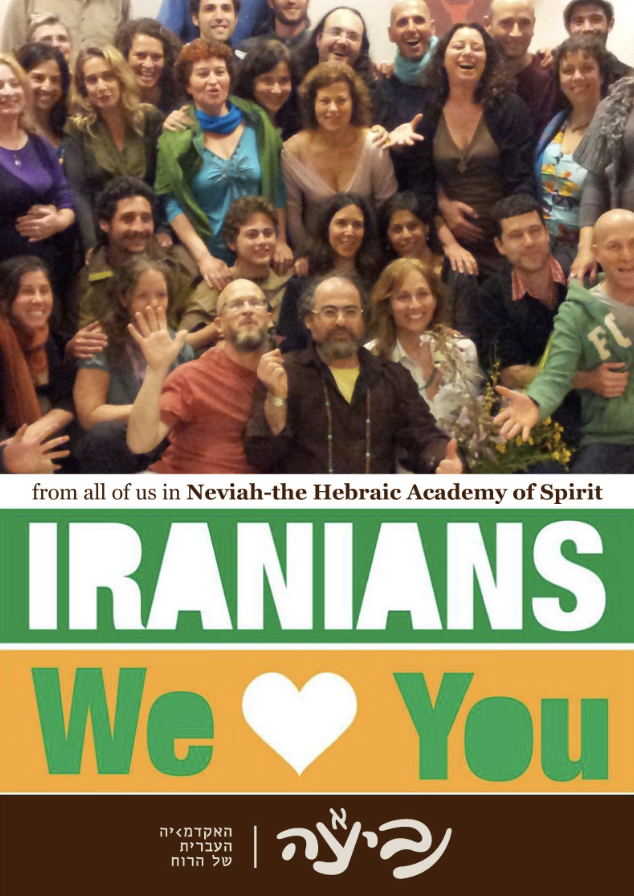
In 2010, I was sitting beside a spring in the Galilee with one of my good friends — Shmuel Shaul, who is a Hebrew shaman. We decided to establish a serious learning space that would make Israelis recognize the hidden and unspoken truth – “Judaism” as it is today is not really the path of our ancestors.
Our forefathers and foremothers were Hebrews and Shebrews, close to the earth and to the spirit. Living with the cycles of nature, like Canaanites, people of the Land, and they were worshiping the God and the Goddess — "YHWH and his Asherah" — together, as the archaeological findings attest.
A number of my students put their heads and funds together, and we founded the academy of "Neviah" in Tel Aviv.
Neviah (a double meaning in Hebrew: “Spring of fresh water” and “Prophetess”) was established as “The Hebrew Academy of the Universal Spirit”. Some of my veteran students from the Hamakom Community became teachers at the Neviah Academy. More than a hundred students gathered to study at Neviah. It was a lively and vibrant place.
I was heading my own academy, but still, something was missing for me. Neviah was an academy that operated in classrooms in the city. My teaching included topics of love and sacred sexuality, but it was in theory, and I missed bringing it down into the body. Then ISTA came into our world and snatched us up like a bird of prey. ISTA carried us off on the wings of eagles to the whole world, literally, and a new stage began.
Pele
On one of the weekends with our "Hebrew Tribe," Yehoo, Dawn, and I went down to the beach during lunch break. The sea was stormy. The currents swept me far out, and after some forty-five minutes of struggle, my strength gave out. People who came to rescue me drowned themselves and were hospitalized later. I fought the whirlpools, and my strength was draining away. In complete sincerity, I thought that these were the final moments of my life. I reviewed the life I had lived, and it seemed to me utterly wonderful. I released my grip on this life and prepared for the passage through the gates of death. But then a new thought flashed into my mind: Talking to the spirits of the sea, the waves and the wind, as parts of the Great Being of YHWH, I said that, yes, I am willing and ready to die, if that is the supreme will — but if I am being asked what I choose, then – I choose life! I also promised to live a life of truth, full on, with no compromises.
At that very moment, as in the legends, a huge wave came, carried me with it and threw me toward the rocks near the shore. Good people came and dragged me like a dead body, as in the movies, onto the sand. I was utterly exhausted. I couldn't lift a finger, but I laughed. I was so amused. To be alive on dry land seemed to me an absolute miracle. Almost an absurdity. I couldn't believe it was happening.
Later, in the community circle that took place as I lay on the floor, barely able to move, my students asked me, "Tell us, who died there in the sea?" Without hesitation, I answered, "Rabbi Ohad Ezrahi died." "If so, who are you then?" they asked. "I am Wonder (Pele, in Hebrew)" I answered – paraphrasing the words of the 18th century hasidic master Rabbi Nachman of Breslov, who said, "I am a wonder, my soul is a great miracle." In those moments, I felt that my very existence was a wonder. From then on, the name Pele — Wonder in Hebrew— was added to my name.
ISTA
The Neviah Academy closed down, as the center of gravity of our activity spread beyond the borders of Israel. From New Zealand to Greece, from Australia to Brazil, from Japan to South Africa, ISTA made us senior teachers, and the world wanted to drink in what we had to share.
I became part of ISTA's global governance, together with my soul friends, Bruce Lyon from NZ and Janine Ma-Ree from Australia. Together we created the Level 2 and 3 of ISTA seminars. Under our watch, ISTA grew from a minor and not too respected organization to an empire that took the world of Tantra and sacred sexuality by storm.
The practice at ISTA was radical. The intention was to give people back their inner power. To help them restore their personal sovereignty that had been taken away from them by political forces that wish to control human beings — religions, and states. The way personal sovereignty is robbed from the individual is by enslaving eros to complexes of guilt, shame, and fear. Our humble mission was to offer the remedy for that historical process in Humanity.
We did not come to teach sex positions or shibari bondage, but to demonstrate how to liberate our life-force. The simple fact is that people who are sexually and emotionally liberated are not easily enslaved by systems of power. People who are sexually liberated are sovereign, independent thinkers, living outside of any dogma. They can abstain from sex, live with ten lovers, or raise children in a monogamous home — but they do so out of free choice, and not out of obedience to social codes. That is what we wanted to share with humanity — this radical freedom, and the gateway to it was through the portal of Eros.
It was clear to us that the moment we grew, the establishment would notice and then, like in the Matrix film, would try to erase us from the face of the earth, keeping humanity enslaved “in peace”. What we did not know was that it would come not only as an external attack, but also have roots inside us.
When Dawn and I went through an interview before joining ISTA’s faculty, we were asked whether we agreed with ISTA's unique culture. When we asked what the " ISTA’s culture” was, it was said that at ISTA, there is no prohibition on erotic relations between team members and participants, as long as it is done with full consent. We accepted this wholeheartedly. It had always seemed to me that the prohibition on such relations resulted mainly in two ways:
One is the infantilization of students. Instead of empowering them to live as sovereign adults who take full responsibility for their lives, it normalizes the opposite and, by doing so, primarily serves the systems that wish to hold people small. This, in my eyes, is why this prohibition is so common — disguised as caring for the week in society, it actually disempowers people, and works for the interests of oppressive systems.
The other is that sexuality, ruled by fear and shame, goes under the surface, despite all prohibitions — because eros is powerful and does not easily surrender to musty protocols, it merely goes underground. In many institutes where this prohibition exists, teachers and students relate covertly, and when it blows up, everybody is shocked. To cover those sexual relationships up, people need to tell a thousand lies. The sacrifice of these rules is integrity, while lies become normalized.
Dawn and I wanted everything to be in the open, shameless, and celebrated in full transparency by the community. Nothing should be done under the rug or in the shadows. From our many years of interacting with the Tamera community in Portugal (a long story in itself), we imported the culture of transparency and celebration of sexual connections within a community Forum into ISTA.
Sex is nothing to be ashamed of. On the contrary, teachers of sacred sexuality should not “teach swimming via Zoom” — they should jump into the water with their students, and lead by example. Sovereignty, transparency, and integrity were the values we wanted to establish as core in our communities around the world.
Over the years, ISTA expanded. Level 1 became a workshop that anyone who respected themselves in the “spiritual” communities felt they must take. Thousands, and perhaps tens of thousands, of people took part in our seminars. Of course, there were also some dissatisfied clients (where are there not?), but on the whole, the success rates were enormous. People reported that their whole lives had changed for the better. Mothers sent their children, women sent their partners. It was working!
Within the framework of ISTA, I had the privilege of teaching men and women from countries such as Saudi Arabia, Lebanon, Syria, the Palestinian Authority, Dubai, Afghanistan, Egypt, Iran, Yemen, and Pakistan. Who would have ever believed that people from those Islamic countries would come to learn sexual shamanism from the bearded rabbi from Jerusalem? But they did, and it was amazing. That was real peace-making. Naked and alive, we sang our praises to Allah and the Great Goddess together.
All those years, I was looking to establish an ashram dedicated to the work of Great Love. I looked into various options for buying a large piece of land, but in the end, I found a Maltese partner, who works with strong medicines, such as bufo, kambo, and iboga, and together we founded during COVID the Ashram of Love in Malta.
The Crisis
Deep inside, I knew that I had to retire from ISTA and move on. But I didn't know what's next, and also — I must admit — I was too comfortable. My seminars were sold out, and invitations to teach all over the world filled up my calendar.
One night, during a Level 2 seminar in Arizona, I got up after midnight, went out naked to the desert and prayed. I opened my prayer with immense gratitude. Everything in my life was beyond good! But I knew that for several years now, I had basically been treading water. "Show me what's next," I asked, and the answer was not long in coming.
One of the participants in that seminar in Arizona, with whom I practiced a transpersonal exercise, was in a relationship with a young American Neo-Tantric teacher who opposed ISTA. That young man did not like that his partner had chosen to attend an ISTA seminar despite his own opinion of it. ISTA, in his view, was an organization that was totally not trauma-informed, and everyone, of course, must be trauma-informed.
The young man toiled and labored for a while until he managed to convince his partner that what had happened in our ISTA seminar was bad and wrong. According to the trauma-informed ideology he believes in, teachers are forbidden to practice with students.
They published a letter of complaint online, which was found by an Israeli journalist, who was recruited by some self-appointed activists to condemn our work. We knew this would come at some point, but I don't think we were really ready for it — and for that lack of readiness, I, too, as someone in a position of leadership, assume responsibility.
Internal conflicts weakened ISTA's leadership from within the organism. Politics — yes, petty politics of competition over centers of power and influence — seeped into the senior teaching team of ISTA. Angers, insults, quarrels, and intrigues weakened us from within, at exactly the time that the wave of attacks came to wash over us from outside.
It is not too hard to notice that the complaints that came from outside served the agendas of those who had been in disagreement with our governance. And thus, the lions of the founders' generation started to be replaced. Bruce, Janine, Dez (The Founder), and I, Komala Lyra, Kamala-Devi, and Triambika — all of us left the organization, one after another. Against the men in this group, there were quite a few complaints, but the truth is that there was nothing any one of us was accused of that was not relevant to all of us, women and men alike, and to the culture of ISTA as a whole. Open and transparent sexual contact with participants was not a deviation from the organizational culture, but a part of the organizational culture itself.
"I did the same things you did, probably even more," one of those who seized the reins of leadership after I left said to me during our core gathering in Italy, "but what to do — the complaints focused on you, brother. They could just as well have focused on me, of course, but they didn't," he said, and sipped some good Italian wine.
My heartbreak was deep. After all, I was one of those who gathered him and some other ambitious folks into the ranks of ISTA, mentored them, and promoted them to positions of leadership. If there is politics and intrigue at ISTA, part of the responsibility for that, so I knew, rests with me as well. “ My own vineyard I did not guard,” as it is sung in the Song of Songs.
Soul-Searching
In September 2022, I retired from teaching ISTA seminars and entered a deep and lengthy period of soul-searching. I wanted to know whether, and where, I had gone wrong. My love life connected me during that period with a deep and wise woman named Katra, and together we dove into the depths of the shadows. Through this inner work, "what's next" became clear … this work of transformation and initiation that I went through was radical as fuck, and deep.
I walked through the valley of death and experienced "cancel culture" in its full force. As I was already known as a teacher worldwide, the number of rotten tomatoes hurled at me this time was enormous. Some of the tomatoes were even recycled and thrown twice. Once toward ISTA, and a second time when someone picked them up off the floor and threw them at me. The stench that enveloped me was serious. The Hasidim say that when stones are thrown at you, you should gather them up and build yourself a house. But what does one do with rotten tomatoes? Compost, perhaps.
After retiring from teaching with ISTA, I devoted myself to deep processes of death and rebirth — well fertilized, indeed, by tomato compost. It was clear to me that, without any connection to the question of whether the claims against me were true or false, and without any connection to those who may have tried to stir the pot for their own benefits, all of this came to me by divine providence. I had asked to know what's next, and my prayer was answered — big time!
I was called to set out on a journey, and the tomatoes were merely marking, in glowing red, the exit door out of the palace of my former life. The party is over, lights out. “You want it darker, we kill the flame”.
Initiation Through the Shadows
I understood that the tomatoes were actually made of great divine Love. And they are here for me; even if they disgust me and frighten me — they are here for me. I understood that I am on a journey of initiation, managed and organized carefully by my own soul.
Journeys like that are always challenging, and even dangerous. No one can be sure that when you try to pluck a hair from the tiger's whiskers to bring it to your elders, you won't end up as dinner. But that is the very point of true initiation journeys — there is real risk, and they are not "trauma-informed".
Therefore, if you are scared to death — it makes complete sense. After all, even if the tiger won't devour you — something in you will surely die through the very process of initiation. One stage will end, and a new one will open – if you succeed. And if you don't, never mind. Try again in the next incarnation. The soul is eternal.
Based on the processes I went through, Katara and I created the Black Butterfly workshop. A workshop that invites people to undergo a deep metamorphosis through an encounter with their shadows, revealing the great gifts hidden within them, as Hasidic Kabbalah teaches. For me, the encounter with the raw materials that were hidden from the spotlight of consciousness unpacked gifts so great and so vast that, even for a moment, I have no wish to return to the life I had before the crisis. It was all worth it. Life is a wondrous journey of initiation. A true work of art.
Shadow work was not at all new to me — over the past six years, I had created the "Shadow Animals Oracle Cards” deck, which is just about to be published. But the depths I was privileged to penetrate as a result of the distress were greater than before. They gave birth to the magnificent Black Butterfly body of work and enriched the workbook of The Shadow Animal Cards with even deeper insights.
Kadesha
Ah, I forgot to mention that in 2016, I published the first volume of the historical-novel trilogy Kadesha.
The first volume — The Return of the Priestesses of Love — opened a window for many people into the sexual shamanic practices of our Hebrew ancestors. It offered a glimpse into the censored world of the Hebrew priestesses, the kadeshot, who served the Goddess in the temple of Ashteret in Jerusalem during biblical times. This work was carried out for centuries, until the monotheistic revolution of King Josiah and his shrewd advisor Shaphan the Scribe came upon them, destroyed the temples of the Goddess, and imposed on our ancestors a religion now called "Judaism."
In 2020, I published the second volume, titled “Shining Darkness”. The book deals with the colorful and challenging figure of Jacob Frank — at whom everyone — from the rabbis to the secular professors — has been in the habit of hurling rotten tomatoes for centuries.
In my view, Jacob Frank was a kind of cosmic joke. Someone up there felt like having some fun and dropped a reincarnation of a crazy-wisdom Tantric master into the bowels of the Jewish community of 18th-century Poland. A rabbinic Jewry that lived in the shtetls, ate schmaltz, and had only just begun to recover from the Chmielnicki Cossack pogroms — the massacres of 1648–49, which were like the Seventh of October on steroids. Into that world, of Catholic priests, choirboys, rigid rabbis, and chaste women, there suddenly appeared one wild man, who saw everything completely upside down and preached that sacred sexuality is the way to redemption. Who there could possibly have understood him? As someone who knows a thing or two about Jewish sources and sacred orgies alike, I tried to give his character the depth it deserves. Today, I am slowly working on the third volume of this trilogy. I have no idea when it will be complete.
From Trauma to Initiation
In recent years, I have learned a great deal about trauma. Though I rather detest certificates, I received a certificate as a "trauma-informed facilitator." And yes, I am so informed that I came to understand just how much the consciousness of trauma shapes the world we live in today.
The senior psychologist Nachi Alon defined the human being of our era as "Homo Traumaticus" — that is, a person who perceives himself through the prism of trauma. I have to admit that I did not understand how widespread the phenomenon had become or how it had attracted devoted, zealous knights, even among the "Neo-Tantric" communities. Nor did I understand how much, when one looks through this prism, some of the things we did at ISTA, with the intention of empowering the participants, really do not look good. I did not take into enough consideration that, after all, our students come from the Homo Traumaticus culture, and they return to it the moment they leave the seminar. Following this new understanding, I changed my ways to better suit the kind of person we work with today.
One of the things I understood I had gotten wrong was also that I had not invested in teaching the conceptual, kabbalistic, and metaphysical background that, for me, stands behind all this radical practice. And so, on my sixtieth birthday, I opened the online study place "Shoov LaMakom" — where I now share my teachings every Sunday. Teachings that flow from the ancient texts of Kabbalah and Hasidut, in an encounter, a lovemaking, and a samba dance with Greek mythology, Depth Psychology, and various Buddhist ideas.
Together with my beloved Dawn Cherie, we are now weaving a new mystery school, where Kabbala text study, embodied practices, and sacred rituals can enrich one another, as they should (write us if interested).
The radical transformation process I call "From Trauma to Initiation" is now woven through all my work. In the group events, as well as in the one-on-one work I do with select individuals.
The next stage in humanity will turn the Homo Traumaticus into Homo Initiatus. The recognition that there is nothing that happens to us, small or large, that is not part of the journey destined for our soul is a big part of it. We, humans, need to learn to overcome the temptation of victimhood and see everything as part of our initiation journey. Everything in our life is merely what I call “art supplies” for the great creation of the masterpiece of our life, which is our life, when well lived.
The Inner Point
Today, in 2026, I live on the slopes of the holy mountain Chirripó in central Costa Rica. With the inheritance money that came through the generosity of my loving parents, I bought myself a small piece of land, and I am building on it my home and center of activity, dedicated to the Art that is self-arising from one's “Inner Point”. Because in the end — I am an artist, and an art teacher. Even if the materials of my art are composed mostly of kabbalistic texts and human souls, it is still, above all, a work of art presented to the divine.
I invite you — all those who are willing to take all the screw-ups and traumas that life has provided them with as raw materials for creation, to dip a brush into the Inner Point of the heart and begin to create the unique work of art, the one that no one in the entire universe could have created but them — because no one had a life as full of the beauty and the fuck-ups as theirs — to come and study art with me.
This is what I love to do with people — art, unfolding from their unique and special inner point.